Seismic Anti-Static Raised Floor System
The Fineco Seismic Anti-Static Raised Floor System combines structural steel understructures with concrete-filled panels or high-pressure laminate surfaces for mission-critical facilities in seismic zones. It provides continuous seismic bracing and electrostatic discharge control to support high-density server racks while absorbing lateral shear forces.
Key Features
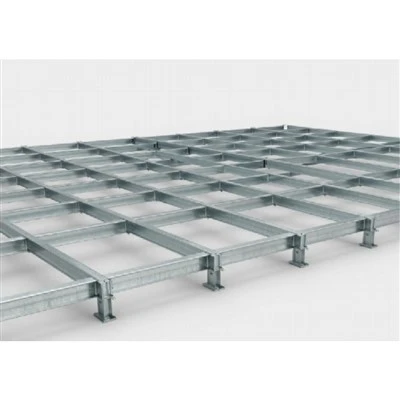
Rigid Seismic Bracing: Heavy-gauge steel stringers and lock-down pedestal heads prevent lateral shifting and uplift during tremors.
Controlled ESD Dissipation: Surface-to-ground resistance calibrated between 1.0 × 10^6 and 1.0 × 10^9 ohms to bleed static charges safely.
High Load Capacity: Withstands heavy concentrated and rolling loads without permanent deflection or fatigue failure.
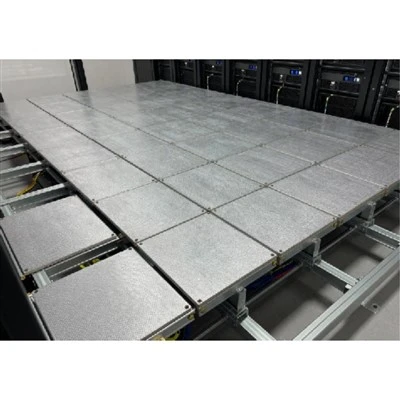
Modular Accessibility: Interchangeable panels allow rapid under-floor access for power cabling, fiber optics, and HVAC ducting.
Precision Leveling: Heavy-threaded pedestal stems allow vertical adjustments of plus or minus 25 mm over uneven slabs.
System Structure
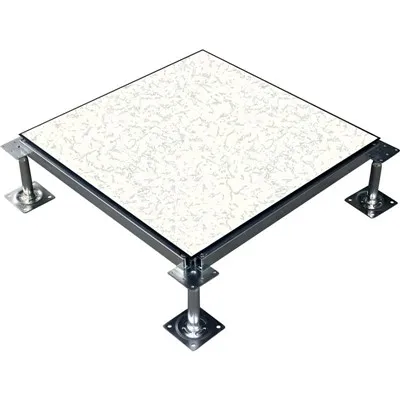
Finished Floor Surface: High-pressure laminate, conductive PVC, or bare steel for carpet tiles.
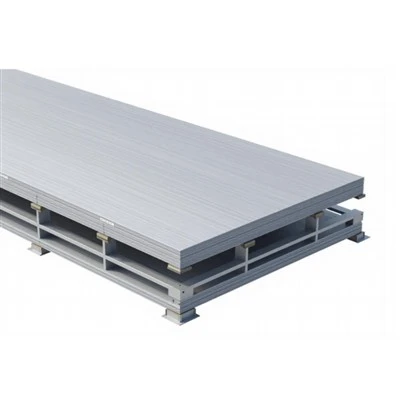
Encapsulated Core Panel: Welded steel sheets filled with a cellular lightweight concrete core for rigidity and sound deadening.
Perimeter Gasket: Provides acoustic sealing and lateral vibration dampening between panels.
Stringer System: Bolted steel frame connecting pedestal heads for horizontal seismic grid rigidity.
Pedestal Assembly: Anti-vibration mechanical locking nut, height-adjustable steel tube, and heavy base plate anchored to the subfloor.
Technical Specifications
|
Parameter |
Specification Details |
Testing Standard |
|
Panel Material |
Cold-rolled steel top/bottom with cementitious core |
GB/T 36340 / CISCA |
|
System Height (FFH) |
300 mm to 1200 mm (Project customizable) |
ISO 9001 |
|
Concentrated Load |
4.45 kN to 6.67 kN (1000 lbf – 1500 lbf) |
CISCA / EN 12825 |
|
Rolling Load |
2.67 kN to 4.45 kN (Over 10,000 cycles) |
CISCA Standards |
|
Electrical Resistance |
1.0 × 10^6 ohms to 1.0 × 10^9 ohms |
ANSI/ESD STM7.1 |
|
Fire Performance |
Class A Flame Spread / Smoke Developed < 25 |
ASTM E84 / UL 723 |
|
Dimensional Tolerance |
Length/Width: plus or minus 0.15 mm, Thickness: plus or minus 0.2 mm |
Factory QA Protocol |
Seismic Performance
Lateral Force Distribution: Shear loads from server racks transfer through the rigid stringer grid and dissipate via anchored pedestals.
Uplift Prevention: Mechanical locking fasteners prevent panel dislodgement from vertical seismic waves.
Compliance Benchmarks: Engineered for IBC Seismic Design Categories D through F; tested against Bellcore GR-63-CORE Zone 4 criteria.
Typical Applications
Hyperscale & Colocation Data Centers: Server halls housing heavy blade servers and high-density power distribution units.
Semiconductor Fabrication Plants: Cleanrooms requiring vibration resistance and continuous static grounding.
Telecommunication Hubs: Central switching offices requiring operational integrity during seismic incidents.
Control Rooms & Dispatch Centers: 24/7 mission-critical environments with complex under-floor cabling.
Installation & Customization
Subfloor Preparation: Requires clean, cured concrete treated with anti-dust sealer and laser-leveled benchmarks.
Anchoring: Pedestal base plates secured via mechanical expansion anchors or structural adhesives.
Grounding Integration: Includes copper foil tape and terminal lugs per 100 square meters for low-resistance earth bonding to the main electrical bus bar.
Custom Options: Panel finishes (HPL, conductive PVC, bare steel), custom cable grommets, air grilles up to 55% open area, and variable heights.
Standards & Quality
Manufacturing Standards: Produced under ISO 9001 and ISO 14001 certified facilities.
Material Traceability: Cold-rolled commercial steel sourced exclusively from top-tier mills with full chemical and mechanical mill test reports (MTRs) provided per shipment.
Third-Party Testing: Batch samples undergo destructive load testing, electrostatic decay testing, and galvanization thickness verification exceeding 20 micrometers.
Manufacturing & Project Support
Production & Testing: Automated stamping lines and multi-point robotic welding cells yield over 100,000 square meters monthly. Every batch undergoes destructive point-load testing on an in-house 50-ton hydraulic compression machine.
Engineering Support: Shop drawings, seismic calculation reports, and floor layout optimization based on CAD and BIM models.
Logistics: Palletized, moisture-wrapped, edge-protected, and containerized with dunnage bags for ocean freight.
Frequently Asked Questions
Q: How does the seismic stringer system prevent floor collapse during an earthquake?
A: Bolted, heavy-gauge steel stringers lock mechanically to pedestal heads to form a rigid diaphragm. This ties panels together, distributing lateral shear loads uniformly across the anchored pedestal matrix to prevent individual panel dislocation or frame buckling.
Q: What is the exact electrical resistance range, and how is ESD prevented?
A: Surface-to-ground resistance is maintained between 1.0 × 10^6 and 1.0 × 10^9 ohms. This bleeds accumulated static charges safely into the grounded pedestal network without risking equipment shock or hardware damage.
Q: What documentation is provided for structural and seismic compliance?
A: We supply complete engineering submittal packages, including professional engineer-signed structural calculation notes, third-party load test reports, seismic compliance letters (IBC/Bellcore GR-63-CORE), and mill test reports for raw steel.
Q: Can this system accommodate heavy air-conditioning units and battery banks?
A: Yes. For localized heavy equipment like UPS battery racks or CRAC units, we provide supplemental steel under-structure channel bridging and heavy-load pedestal columns, increasing load thresholds up to 11.1 kN without altering finished floor height.
Q: What happens to the floor system after a seismic event?
A: Because lateral seismic energy is absorbed without structural shear failure, post-earthquake inspections typically require only visual checks for panel alignment and minor pedestal level recalibration, avoiding total system replacement.
Q: What packaging methods prevent transit damage during international shipping?
A: Panels are stacked on fumigation-free wooden pallets, interleaved with protective foam sheets, edge-wrapped with corrugated cardboard, and secured with heavy-duty steel strapping inside containerized shipments with dunnage bags.
Hot Tags: seismic anti-static raised floor system, China seismic anti-static raised floor system manufacturers, suppliers, factory